
Discover what it's like to complete a fourth-year pharmacy (P4) Advanced Pharmacy Practice Experience (APPE) with Wright Geriatric Consulting.
Through firsthand reflections, our pharmacy students share their experiences in geriatric consulting, medication management, interdisciplinary collaboration, and patient-centered care. Explore how consultant pharmacy offers unique opportunities to apply clinical knowledge, build professional confidence, and discover career paths beyond traditional pharmacy settings.
P4 Pharmacy Student Experiences: Learning Beyond the Pharmacy Counter
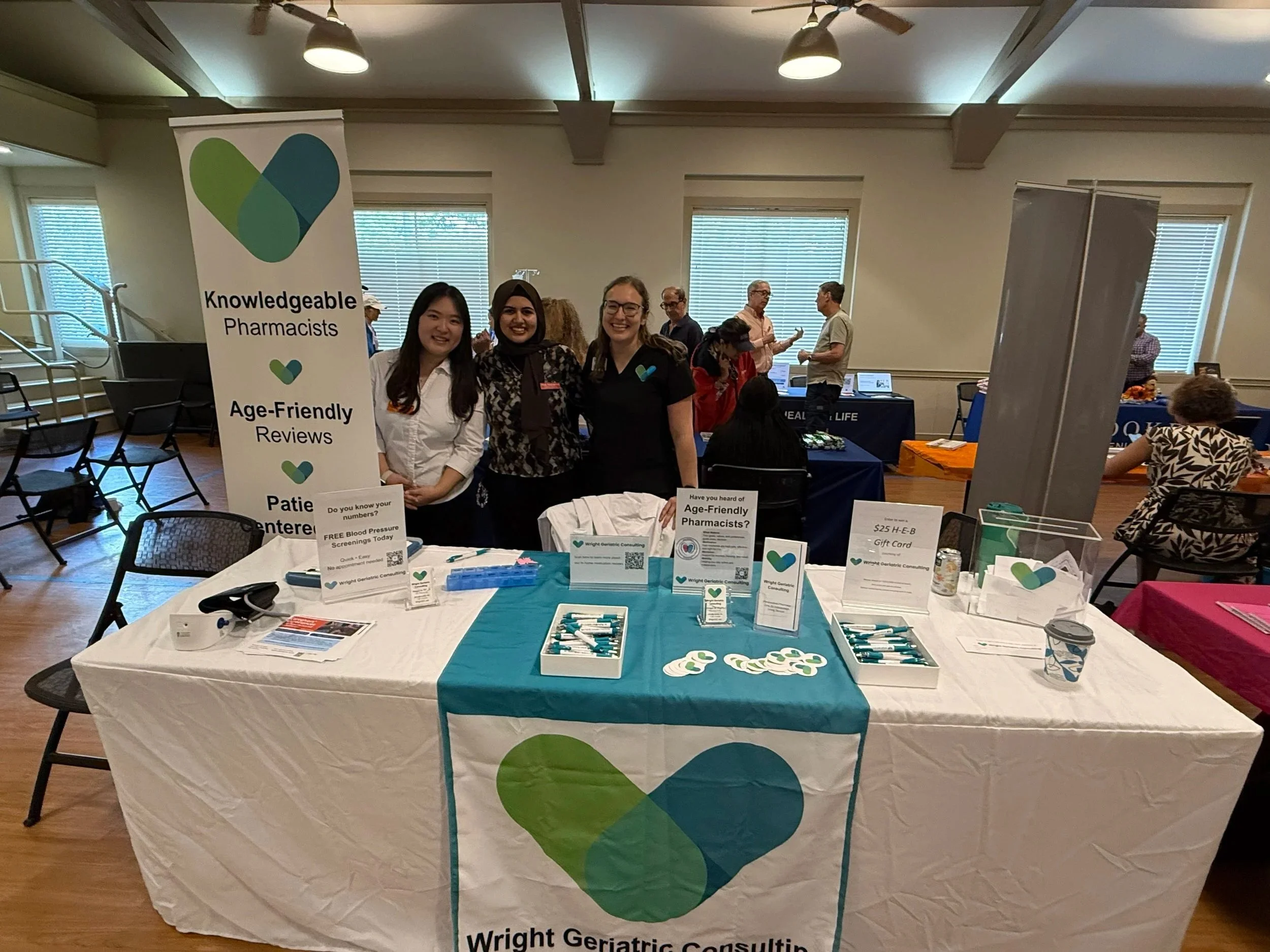
When choosing my APPE rotations, I wanted to explore different areas of pharmacy, especially nontraditional settings that I wouldn't normally get to experience. Geriatric consulting was one of those areas, and honestly, I didn't know much about what consultant pharmacists did before starting this rotation. Since this was also my first clinical APPE, I was a little nervous about how well I would be able to apply what I had learned in pharmacy school.
One thing I noticed early on was how organized Dr. Wright was. My rotation partner and I were her first students at Wright Geriatric Consulting, but it didn't feel that way. She had a clear plan for the rotation and made sure we had opportunities to learn about different aspects of consultant pharmacy. I also appreciated that she incorporated clinical questions beyond geriatrics, which made the experience useful regardless of our future career interests.
Throughout the rotation, I learned about the different responsibilities of consultant pharmacists, from visiting long-term care facilities and conducting medication audits to reviewing patient medication regimens. One of the parts I enjoyed most was working through patient cases and discussing our recommendations with Dr. Wright. We also worked on gradual dose reduction (GDR) reviews, which helped me become more familiar with the medications commonly prescribed to older adults and the considerations involved in reducing or discontinuing them. One thing that surprised me was how many residents were taking melatonin! These experiences helped me become more comfortable using clinical resources, identifying medication-related concerns, and explaining my recommendations.
One lesson that really stayed with me was something Dr. Wright often emphasized: asking patients, "What matters most to you?" In pharmacy school, we spend so much time learning the clinical aspects of treatment that it's easy to overlook how medications and medical conditions affect a patient's everyday life. This is especially important for older adults, whose personal priorities may be different from what we assume. It made me think more about patients' lifestyles, what they value, and how we can accommodate their needs through nonpharmacologic approaches as well. This is something I want to incorporate into my own patient interactions moving forward.
Another part of the experience I enjoyed was interacting with the nurses at the facilities. I was able to build good relationships with several of them, and we had interesting conversations about their responsibilities, our role as pharmacists, and how our work overlaps. It was nice seeing healthcare from another perspective and learning more about the challenges nurses face. These conversations reminded me how important it is to build relationships with other healthcare professionals to provide better patient care.
We also had the opportunity to join Dr. Wright on Fridays when she taught a high school pharmacy technician class. I enjoyed interacting with the students and seeing their interest in healthcare. It was especially nice being able to share my experiences in pharmacy school, answer their questions, and offer advice to students who were considering careers in healthcare.
Outside of the clinical experiences, I also enjoyed getting to visit different parts of Texas. Some of these were places I probably never would have visited otherwise, and I found myself taking pictures along the way to remember the experience. It was a nice opportunity to explore new places while learning about a different area of pharmacy.
Overall, I went into this rotation knowing very little about consultant pharmacy and left with a much better understanding of the profession. I particularly enjoyed the variety of responsibilities and the opportunity to apply my clinical knowledge while working with different healthcare professionals. Although my main career interests are in the pharmaceutical industry, geriatric consulting is now an area I would consider exploring in the future. I'm thankful to Dr. Wright for the time she invested in teaching us, especially as her first students, and for making my first clinical APPE a valuable learning experience.
Jannah Abdulmawjood, University of Houston College of Pharmacy
Professional interest/Career goal: Industry Pharmacy (Marketing or Medical affairs)
Hobbies: Crocheting and reading
Rotation 4, 2026-2027
Before beginning my geriatric consulting pharmacy rotation at Wright Geriatric Consulting, I was unsure of what to expect. Although I had gained experience in various pharmacy settings, I had limited exposure to the roles and responsibilities of pharmacists working in long-term care facilities. However, after reviewing the rotation expectations syllabus on the first day, I became excited about the opportunity to explore an unfamiliar area of pharmacy practice. I was also grateful to be among the first pharmacy students to complete a rotation with Wright Geriatric Consulting alongside my rotation partner.
During the first week, my rotation partner and I shadowed Dr. Wright as we visited various long-term care facilities. Our daily responsibilities included assisting with medication destruction, conducting medication cart and medication room audits, and observing medication administration audits. Through these experiences, I gained a better understanding of the regulations and procedures that help ensure medication safety in long-term care settings.
One of the most valuable aspects of these activities was learning how to identify potential medication safety concerns and ensure compliance with facility regulations. For example, during medication cart audits, we checked for expired medications, appropriate storage conditions, and proper separation of oral and topical medications. Although these tasks may seem routine, I came to recognize their importance in maintaining a safe environment for residents.
Beyond learning the technical aspects of medication audits, I also developed my communication skills through daily interactions with nurses and medication aides. Conducting audits required us to approach facility staff, explain our responsibilities, and communicate our findings. At times, discussing areas that needed improvement was challenging, particularly when staff members were not receptive to feedback. However, these experiences taught me the importance of approaching conversations with professionalism and respect. Over time, I became more comfortable communicating concerns constructively while maintaining positive working relationships with facility staff.
Another important component of consultant pharmacy practice that I had the opportunity to explore was medication regiment review. Consultant pharmacists regularly evaluate residents’ medication regimens, including those of newly admitted residents, to identify potential medication related problems and provide recommendations to doctors and nurses. As a student pharmacist, I had opportunities to review patient cases, develop recommendations, and discuss my clinical reasoning with Dr. Wright and my rotation partner.
These discussions helped me better understand the unique considerations involved in medication management for older adults. For example, I frequently encountered residents receiving long-term proton pump inhibitor therapy without a clear ongoing indication or potentially duplicative medications for sleep disorders. Reviewing these cases encouraged me to consider the risks and benefits of medications more carefully, particularly in a population that may be more vulnerable to adverse drug effects. Most importantly, I gained a greater appreciation for the meaningful impact consultant pharmacists can have through ongoing medication reviews and thoughtful clinical recommendations.
I also had the opportunity to observe gradual dose reduction (GDR) meetings with nursing staff at long-term care facilities. During these meetings, the consultant pharmacist and nursing staff reviewed residents’ medications, particularly psychotropic medications such as antipsychotics and antidepressants, to evaluate whether dose reductions or discontinuation might be clinically appropriate. Observing these discussions helped me understand the importance of balancing medication safety with each resident’s individual needs. It was also a valuable opportunity to see how pharmacists collaborate with other healthcare professionals to make patient-centered decisions.
In addition to these responsibilities, I had the opportunity to administer flu vaccinations to residents at the facilities. Interacting directly with older adults was especially meaningful, as it reminded me that behind every medication regimen and clinical recommendation is an individual with unique healthcare needs and personal priorities.
Another valuable learning experience during this rotation was completing the American Society of Consultant Pharmacists (ASCP) Age-Friendly Care Certificate program. Through this program, I learned about the 4Ms Framework: What Matters, Medication, Mentation, and Mobility. This framework emphasizes a holistic approach to caring for older adults by considering not only their medications and medical conditions but also their personal goals, cognitive health, and functional abilities. It reinforced the importance of individualized, patient-centered care, and I hope to incorporate these principles into my future pharmacy practice.
Looking back, this rotation was a valuable and rewarding experience that broadened my understanding of the pharmacist’s role beyond traditional pharmacy settings. I entered the rotation with limited knowledge of geriatric consultant pharmacy, but I now have a greater appreciation for the clinical expertise, attention to detail, and communication skills.
I am grateful to Dr. Wright and Wright Geriatric Consulting for providing me with the opportunity to explore this area of pharmacy practice and learn through hands-on experiences. This rotation not only strengthened my clinical and professional skills but also reminded me of the important role pharmacists play in improving medication safety and quality of care for older adults. The knowledge and experiences I gained will continue to influence my approach to patient care as I progress in my pharmacy career.
Seorim Park, University of Texas at Austin College of Pharmacy
Professional interest/Career goal: Ambulatory Care
Hobbies: Cooking and baking
Rotation 4, 2026-2027
Disclaimer:
The information in this blog is for general education and information only. It is not meant to replace advice from a doctor or other healthcare professional. Always talk to your healthcare provider if you have questions about a specific medical condition or treatment. Do not ignore or delay getting professional advice because of something you read here. Wright Geriatric Consulting and Abigail Wright are not responsible for any decisions made based on this information.